
In April 2024, the Department of Justice rolled out a new rule for state and local governments: They’re required to ensure their websites, mobile apps, and digital documents are accessible to all users by April of 2026 or April 2027 (depending on the population of the municipality).
Accessibility Rule for Municipal Websites
Issued under Title II of the Americans with Disabilities Act, this rule represents a major shift for government entities delivering digital services. Accessibility is no longer an optional upgrade; it’s a core part of public service. It ensures that all residents can access, understand, and engage with essential information and services, no matter their physical or cognitive abilities.
Deadline to Reach Compliance
Compliance timelines depend on the size of the population served:
- Populations of 50,000 or more must comply by April 24, 2026
- Populations under 50,000 and special districts must comply by April 26, 2027
Who the Rule Affects
The rule applies broadly to state and local government entities, including:
- Cities and counties
- Public schools
- Courts
- Public transit agencies
- Public libraries
- Parks and recreation departments
- State and local agencies delivering public benefits or social services, such as food assistance, health coverage, or employment support
Web Accessibility Standards
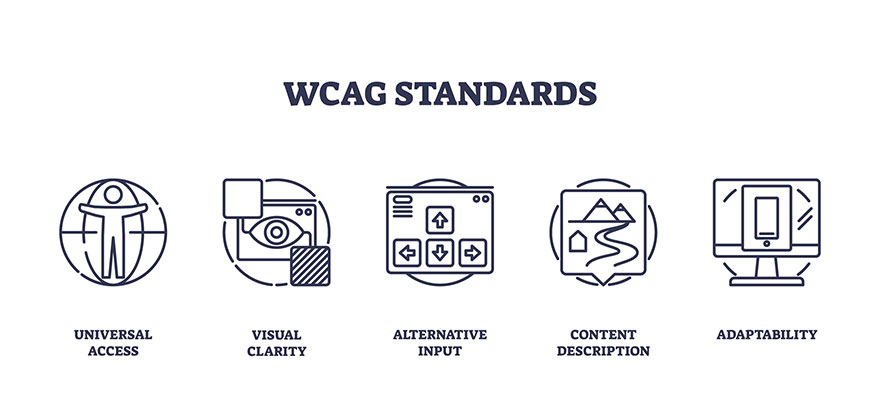
The DOJ rule requires compliance with WCAG 2.1 Level AA, the second level of the Web Content Accessibility Guidelines. These standards exist to ensure all residents can access digital services equitably. For municipalities, focusing on the requirements that have the greatest impact on residents’ ability to use services effectively can make the difference between frustration and full inclusion. Here are some of the standards listed in WCAG 2.1 Level AA and who they help:
- Alt Text: Help residents who are blind or have low vision understand images, icons, and charts
- Keyboard Navigation: Supports users with mobility impairments who cannot use a mouse
- Readable and Understandable Content: Assists people with cognitive or learning disabilities through clear language, predictable design, and consistent navigation
- Color Contrast: Makes text and interface elements legible for people with low vision or color blindness
- Resizable Text: allows users with visual impairments to adjust text size without losing content or functionality
- Focus Indicators: Ensures users navigating with keyboards or assistive technology know where they are on the page
- Accessible Documents: Makes PDFs, forms, and downloadable content usable by people relying on assistive technology
Potential Consequences of Non-Compliance
Failing to meet accessibility requirements by the deadline may have serious legal, financial, and reputational risks:
- Federal Enforcement: The DOJ can investigate and take legal action to compel compliance
- Financial Penalties: Fines can reach $75,000 for first violations and $150,000 for subsequent ones
- Lawsuit Exposure: Individuals with disabilities may file lawsuits, resulting in legal fees and required remediation
- Costly Reactive Fixes: Address accessibility gaps after a complaint or investigation is more expensive than building accessibility proactively
- Public Trust Risks: Non-compliance can undermine confidence in an agency’s commitment to equitable and reliable public service
TPI Can Help
Accessibility is complex, and getting it right requires expertise and planning. That’s where TPI can help. We partner with businesses, agencies, non-profits, and municipalities to offer digital services that:
- Assess current digital accessibility and identify gaps
- Develop and execute remediation strategies
- Train staff to maintain accessibility standards
- Provide ongoing monitoring and support to ensure sustained compliance
With TPI’s accessibility services, municipalities can reduce risk, enhance usability, and deliver truly inclusive digital experiences, ensuring every resident can easily access the information and services they need!